This year the Technical Symposium was held at Loughborough University on 26-27 March.
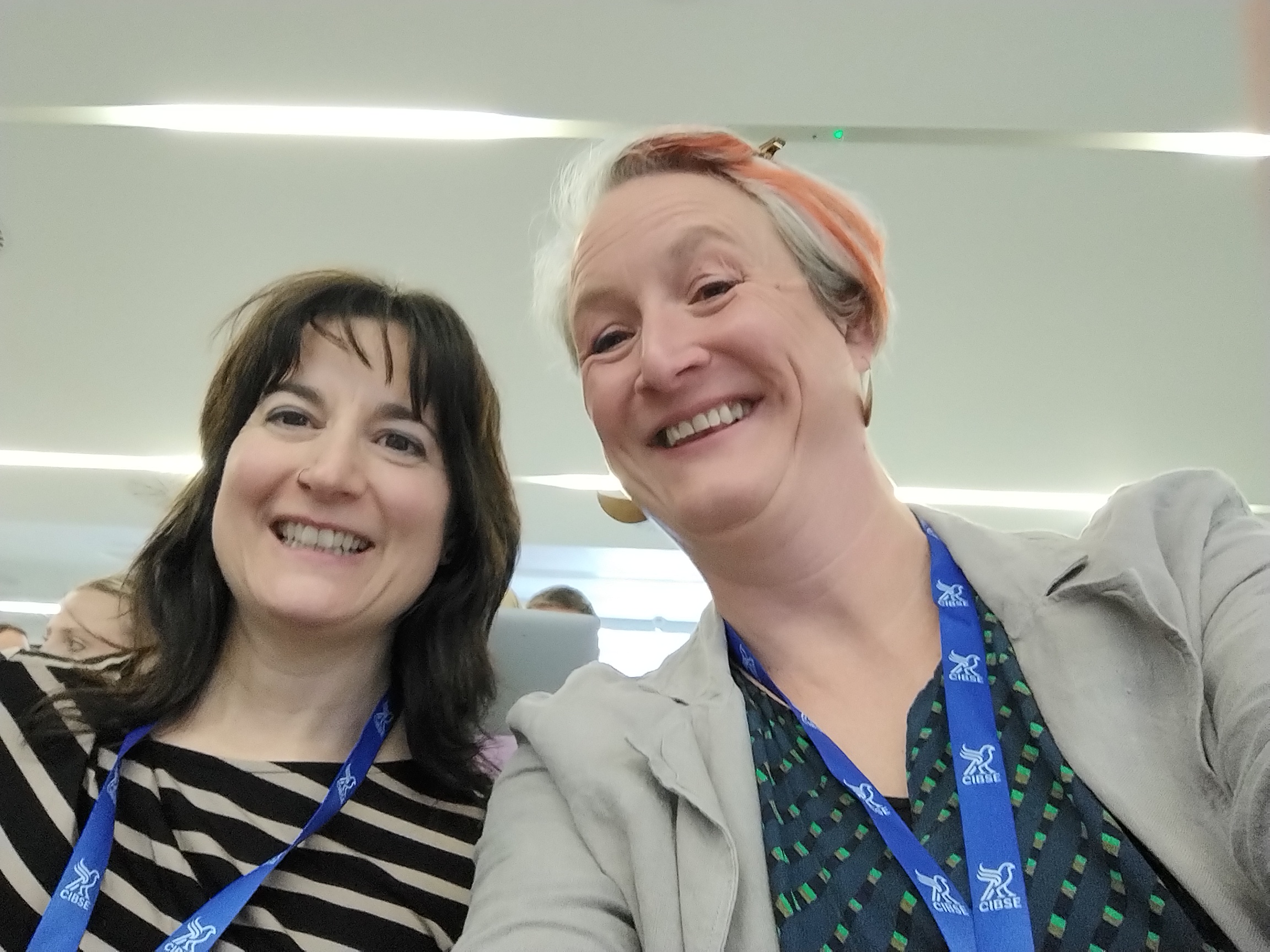
Claire and Susie attended the event for Inkling. We are big fans of the Symposium so make an effort to attend every year and have regularly submitted papers and been peer reviewers. You can read our write-ups from previous years here.
Here are our highlights from this year’s event:
Day 1
Keynote – Professor Cath Noakes OBE kicked off the Symposium with a talk on ‘Integrating science, policy and practice for healthy and sustainable buildings’. She highlighted the importance of defining the scope and purpose of guidance and research in this area. For example, what is ‘good’ or ‘adequate’’ air quality and concerning which aspect – infection control, productivity, odour, etc. Also, Cath highlighted that different stakeholders have different agendas – employers want to minimise absenteeism, while hospitals want to reduce bed-days. It’s difficult to collect evidence in the area of health aspects of buildings, as health involves long-term outcomes, not necessarily in the life span of a single building. We can see effects of building tuning on energy usage within a few weeks or months, but health impacts may take years and are hard to attribute.
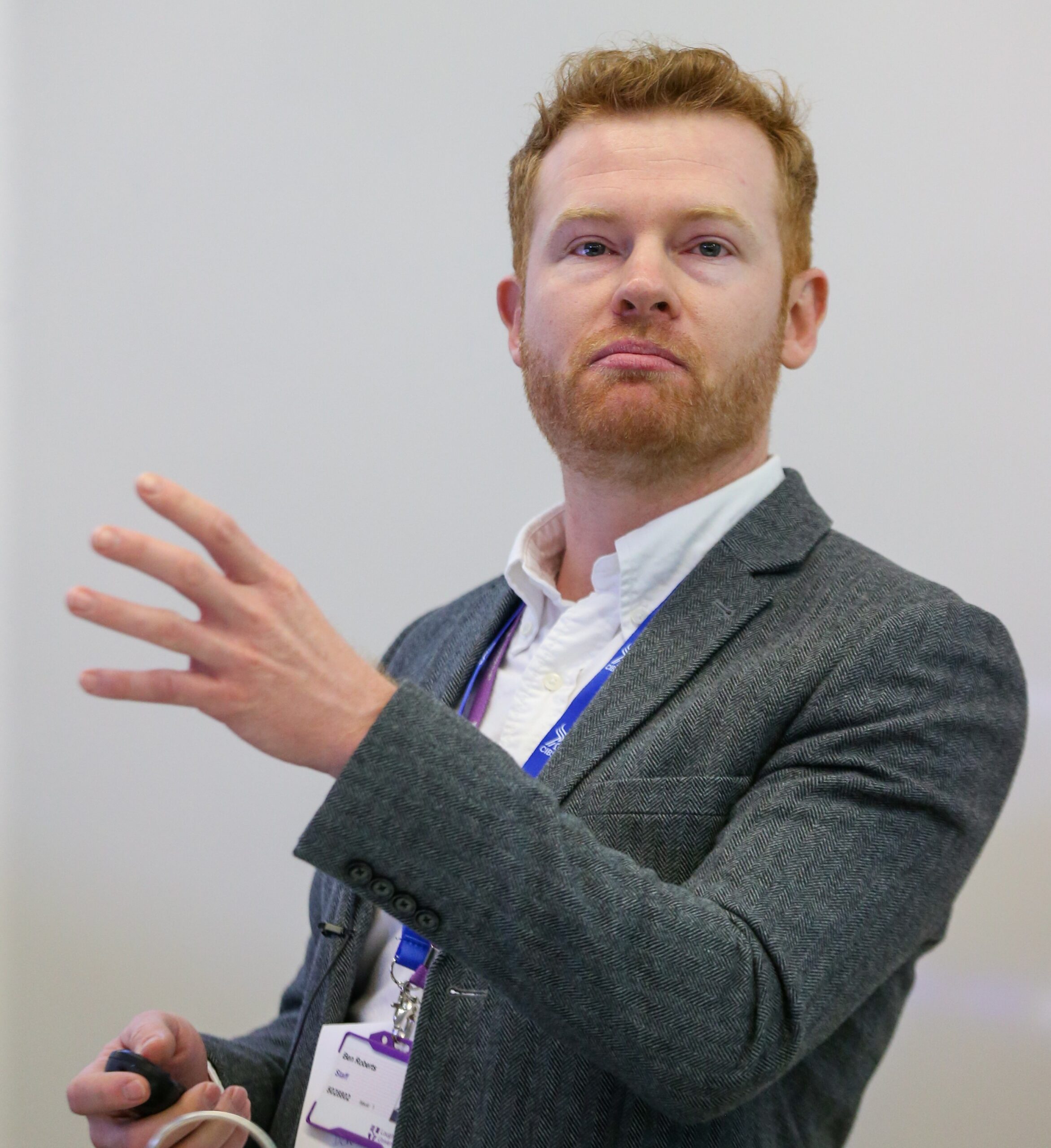
Ben Roberts (Loughborough University) gave an interesting presentation about their work monitoring air quality and infection risk during the trials that enabled mass gatherings to resume after the pandemic. The events included a large open-sided festival marquee, a more enclosed music venue and an events space at Ascot. They measured CO2 levels as a proxy for exposure to exhaled breath and counted the number of people and their distribution through the spaces from images. Their conclusions included: natural ventilation is a more powerful ventilation mechanism than it is sometimes given credit for – especially when you have no walls; intervals are useful opportunities for clearing a venue and purging built up CO2 levels; CO2 levels were highest in the middle of large crowds or furthest from the air sources.
Aanchal Bhagwat (University of Sheffield) presented the paper with the most self-explanatory title: ‘“We have to freeze or be deafened”: A survey on the effectiveness of CO₂ alarms in university spaces.’ This was a good summary of work that identified that CO2 alarms are most useful when they are accompanied by clear directions on what actions to take when they go off; when those actions are viable (i.e. there are windows that can be opened) and effective (i.e. the alarm stops sounding when the actions are taken); and when they don’t go off too frequently causing ‘alarm fatigue’ and irritation. The users’ behaviour is an outcome of their Capability, Opportunity and Motivation to act, so these areas need to be considered in the alarm system design.
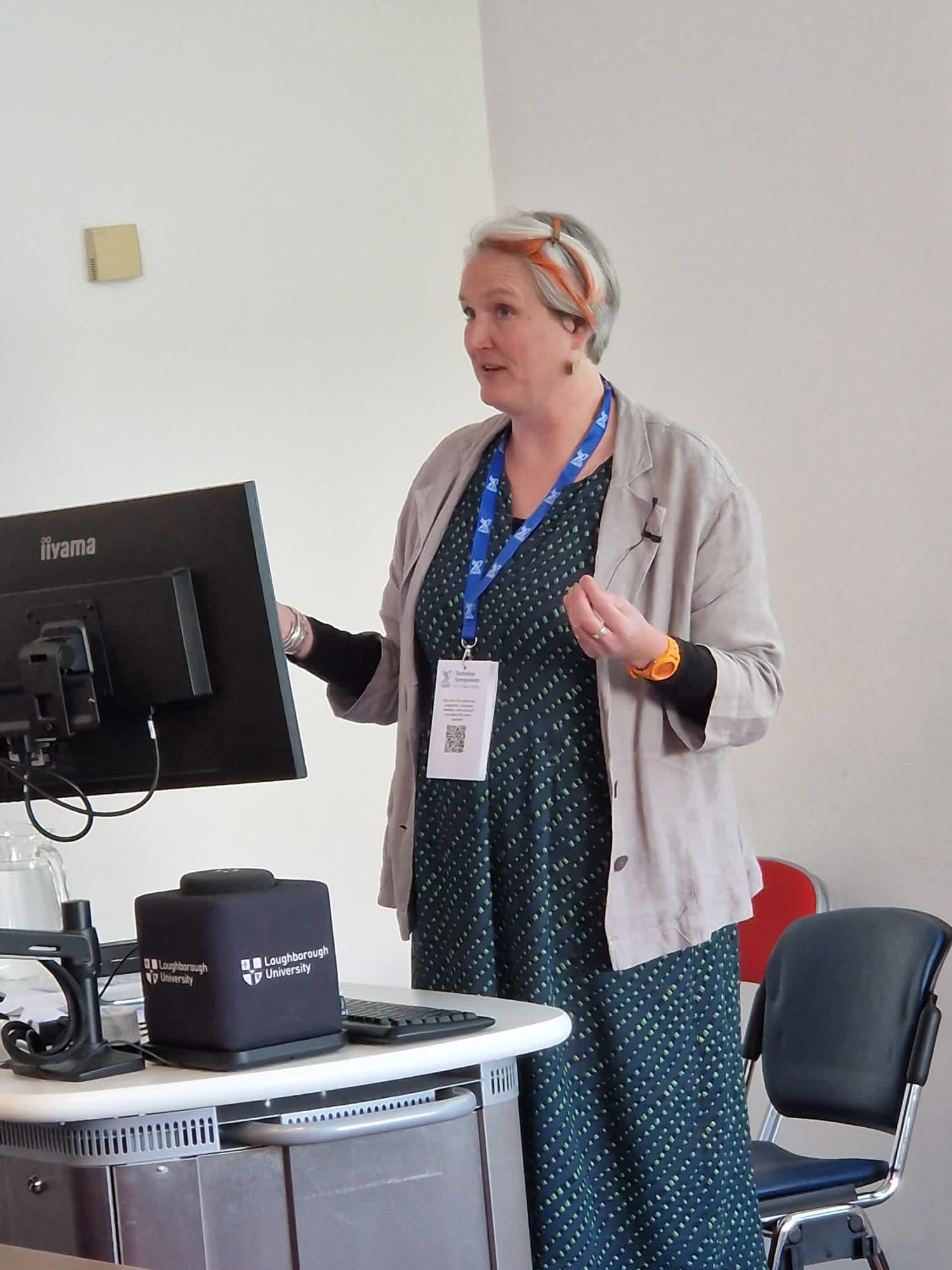
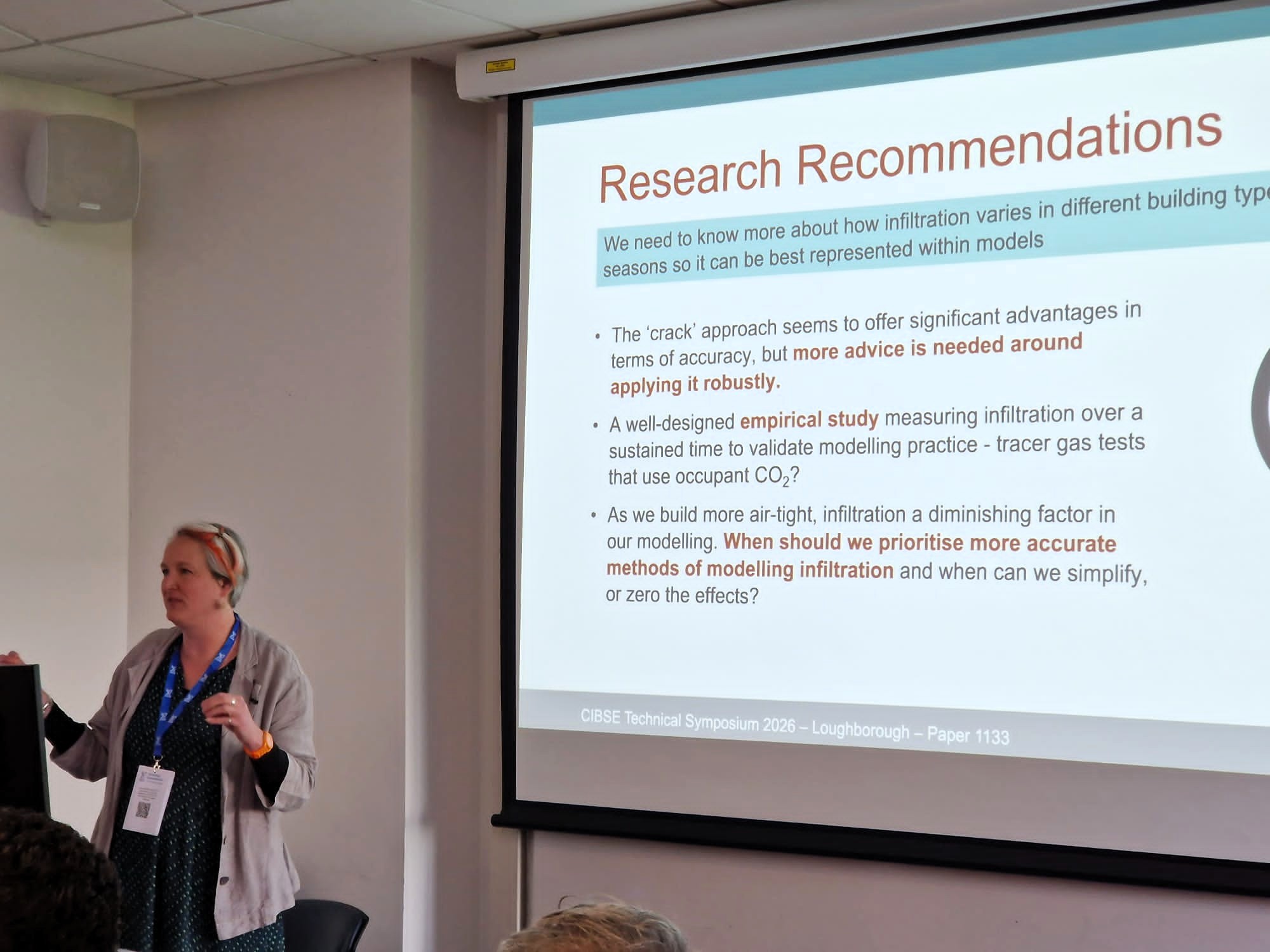
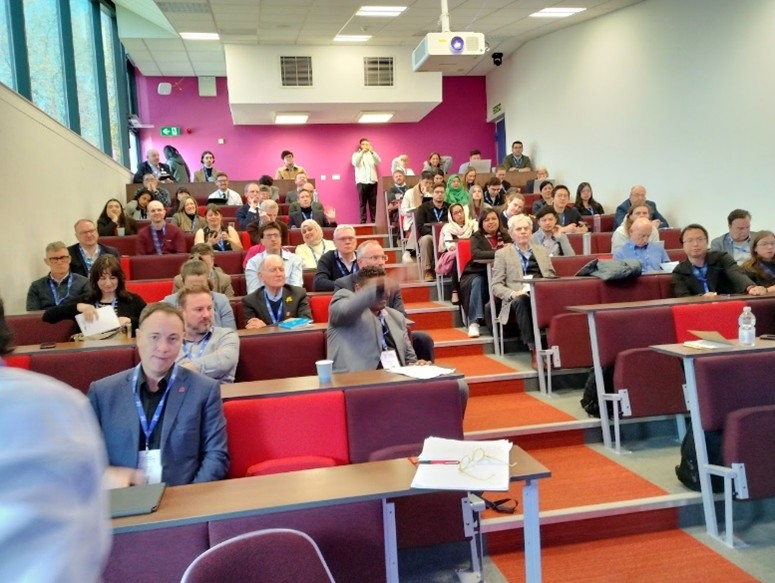
Susie Diamond presented the Inkling paper in the second session: “Beyond Simplistic Assumptions: The Critical Need for Advanced Infiltration Modelling in Dynamic Thermal Simulations”. This is an opinion paper based on the blog we wrote last year. Here’s Susie presenting to a packed house:
Marguerita Chorafa (Introba) presented Passivhaus delivery lessons from two UK projects. This is increasingly topical as Passivhaus is being demanded more widely, for example with the upcoming Scottish ‘Passivhaus Equivalent’ Building Standards Update and with the adoption of Passivhaus by the London Borough of Newham. Key lessons included the importance of the early adoption of the Passivhaus specification, balcony detailing and managing and modelling design changes.
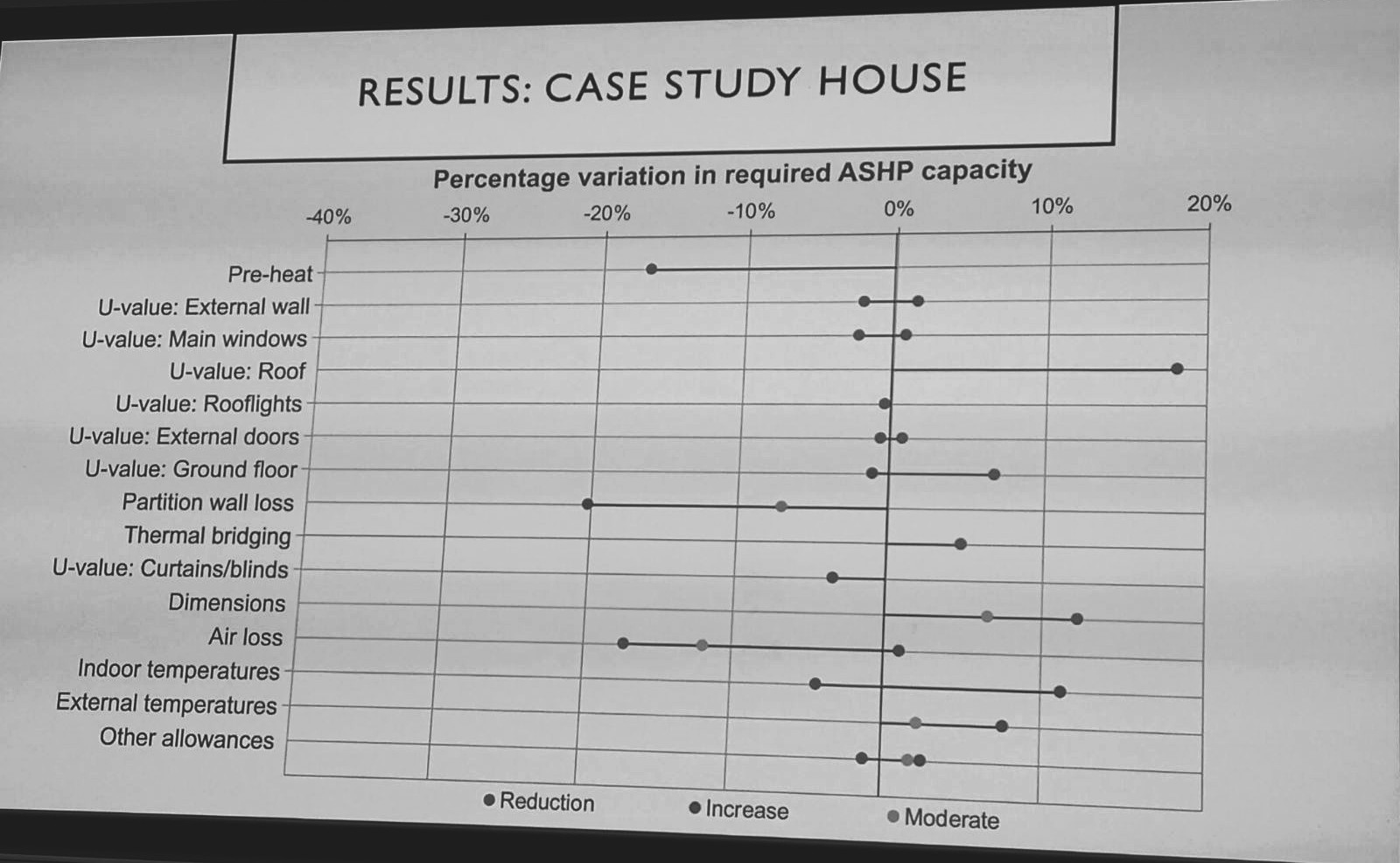
Phil Tower (University of Huddersfield) presented ‘Air source heat pump sizing: a sensitivity analysis’, whichlooks at the sensitivity of ASHP sizing to a range of calculation inputs for both a house and an office building. One interesting finding concerns assumptions regarding heat loss through house party walls. “BS EN 12831-1 suggests that if a neighbouring property is regularly occupied, it can be assumed to be heated to the internal design temperature… However, the regular occupation of neighbouring properties cannot be guaranteed, so the CIBSE DHDG conservatively recommends that neighbouring properties are assumed to be unheated at design conditions, with an estimated internal temperature of 10 °C.” These different assumptions make a significant difference to required ASHP capacity, with an assumption of zero party wall heat transfer leading to a 20% reduction in required capacity compared to assuming neighbouring properties are unheated.
Ljubomir Jankovic (University of Salford) presented a paper about some really interesting monitoring work they are carrying out within the Energy House 2.0 facility which Susie was lucky enough to visit last year.
This study was designed to monitor temperatures inside the test houses with windows open and closed while the ‘external’ temperatures within the facility are raised up to 35°C and lowered down again. The ultimate intent (Inkling are part of the research team) is to compare how the dynamic thermal modelling software results for the same scenario compare with those measured in practice. Without occupants and other weather factors, such as wind and solar gains, there are fewer variables at play which should help with the comparison.
The paper covers the monitoring work and includes analysis which shows that homes subject to heatwave conditions heat up more slowly when the windows are closed than when open.
The paper then attempts to assess the overheating risk within the test houses using the measured data and the criteria within TM52 and TM59. The paper notes that during the sustained 35°C test (Phase 3), the houses failed the TM59 bedroom sleeping criterion, and from this they assert that a Part O compliant home can still overheat. However, TM59 is specifically a design stage methodology predicated on using dynamic thermal modelling software, set internal gains and a full summer of CIBSE DSY1 weather data to determine risk levels. It is not designed or intended to be applied to measured data. For these reasons we don’t think it’s robust to draw conclusions about the efficacy of TM59 and AD-O based on a short period of measured data and a synthetic environment. We are concerned that challenging TM59 and AD-O in this way is unhelpful to an industry that is genuinely trying to improve summer comfort in new homes.
Where we do agree is that we should be thinking about how to devise a design stage assessment that looks specifically at heatwave situations and how we can design heatwave plans to help mitigate them.
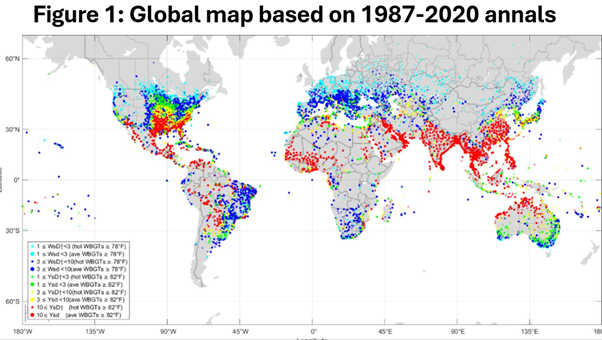
Eric Laurentius Peterson (University of Leeds) gave a paper exploring where in the world air conditioning is actually essential. He based this on weather station analysis using NOAA’s GSOD dataset, and a population weighted analysis based on heat risk classifications using wet-bulb globe temperature. The subsequent heat risk map looks like this, with only the locations with red or orange dots showing an essential need for air conditioning. The UK has a blue dot.
Fun fact from Bill McQuade (ASHRAE president): Haris Doukas, the mayor of Athens, is a mechanical engineer and energy modeller.
The debate at the end of the first day was titled: “Are Building Services Engineers Being Replaced, Repositioned – or Reinvented by AI?” A good question. We learned that CIBSE are producing a position paper this summer which should be a useful read, and timely as Inkling have just written our first AI use policy. The discussion was interesting, but inconclusive. The most striking comment came from the audience where a business owner said they usually employ 15 graduates every year, but this year they are not taking on any. Whether graduate intake numbers recover when we have to start paying more money for these facilities (AI companies are not yet profitable) remains to be seen.
Day 2
The second day was opened by Hannah Gray, the CIBSE ASHRAE Graduate of the Year winner. She spoke about what ‘being fit for 2050’ means to her which included designing:
- With feedback in mind, so we can deliver performance in use
- For uncertainty in a changing climate and with changing technology (including AI)
- For flexibility, in order to respond to the uncertainty
- For people, inclusivity and wellbeing
Craig Gallacher (Glasgow Caledonian University) presented a paper looking at the feasibility of domestic scale carbon capture and storage from individual 24kW combi gas boilers. The conclusions showed that while technically viable, the practical feasibility is limited by the cost (£7.5k+), the space requirements (significant) and the logistics (weekly collection of filled storage tanks in winter). As the author pointed out, it’s important to have explored the potential for when somebody asks why we are not doing it. Fun fact: one potential use for the 22kg CO2 collected daily in winter was to supply carbonated drinks manufacture.
Esam Elsarrag (Hoare Lea) presented a paper on their new free app which gives heat risk and UHI mapping at a postcode level. https://heatmap-public-app-mraioecqk6jmnyeufsrop3.streamlit.app/. While it is always great when these resources are made available for free, it’s not immediately apparent how the tool is intended to be applied in practice.
Ben Abel (Hilson Moran) presented work Inkling have been involved in that builds on the modelled vs measured analyses that started with the Loughborough matched pair houses. This study was focused on a new build apartment in west London that was monitored for a period in summer 2024. The comparison between the modelled and measured data suggested that how we model infiltration makes a difference to how closely the results compare (see our opinion paper above), but there are still some discrepancies on sunnier days suggesting that the models are exaggerating the impact of solar gains. We are comforted that this is increasing, rather than underplaying, overheating risk within our analysis, but we would still like to get to the bottom of what can be done to bring modelled and measured even closer together.
A questioner asked if there should be a badging system for homes to indicate whether they are suitable for more vulnerable occupants in summer. Something Shade the UK are keen to champion.
Isabel Why (Model Environments) gave an interesting paper making the case that it matters that we largely ignore trees in our dynamic thermal models. She says this can lead to a 40% discrepancy in heating and cooling loads when comparing results with and without planting included. Could we incorporate simple trees into models that have parameters for height, shape (skinny, spherical, triangular) and leaf density/porosity? Would we set these parameters based on the existing trees on site now, projections for when the site is complete or when they reach full height? Would we include all proposed trees or only those above a certain size and with preservation orders? Surely we can come up with answers to these?

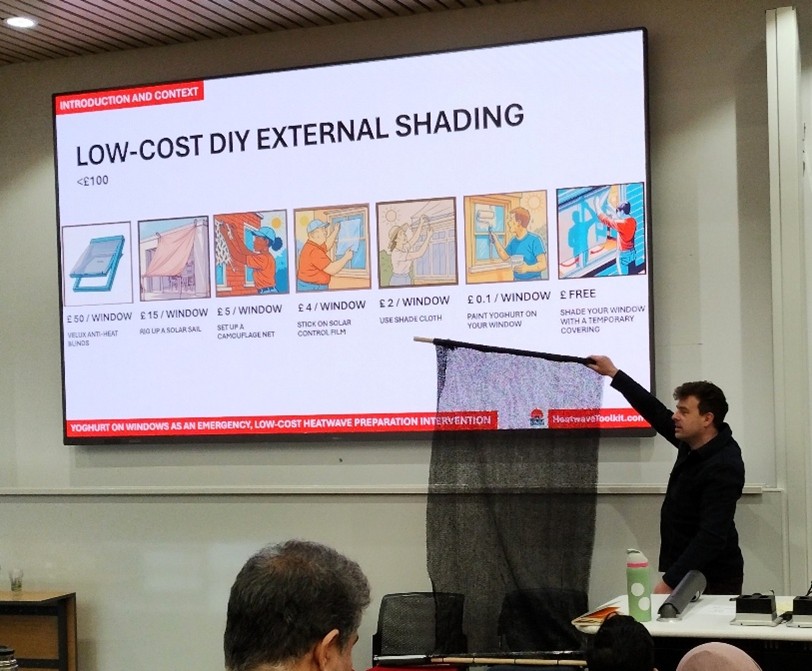
Tom Greenhill gave an excellent presentation on low-cost heatwave preparedness including painting yoghurt on the outside of windows to reflect solar gain. A plan that may sound bonkers but is cheap, easy to apply (a gloss roller is key), has an excellent supply chain and has been scientifically proven using the Loughborough test houses to reduce internal temperatures. He also demonstrated other low-cost products like the netting shown in the photo below. More information is available on his excellent website the Heatwave Toolkit.
Summary
We really enjoyed this year’s event. The organisation and catering were great, and the quality of papers was good. Hats off to the organisers at CIBSE (it’s a massive amount of work) and we look forward to next year.
All the available papers are available here: https://www.cibse.org/knowledge-research/knowledge-resources/technical-symposium-papers/2026-technical-symposium-papers/