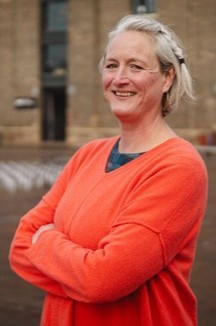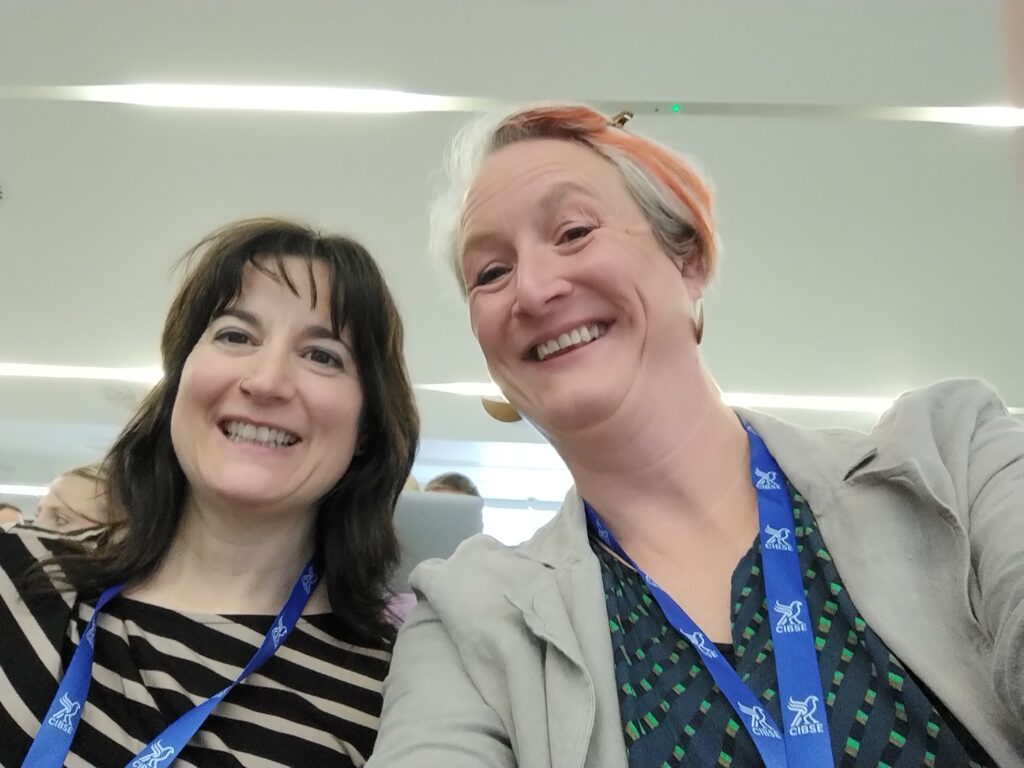
Susie attended the annual GHA conference on 28th January 2026 at the British Library.
It was a really interesting day with a clear focus on the people who will live their lives within the homes we design. Here are the key notes that she came away with.
The keynote speech was given by Peter Apps, author of Homesick and Show Me the Bodies (about the Grenfell tragedy). He talked about the importance of centering quality of life for the residents as the primary objective in retrofit works.
He mentioned the French seconde vie philosophy to retrofit and this fascinating project: https://www.dezeen.com/2025/01/22/lacaton-vassal-530-dwellings-21st-century-architecture/
Keeran Jugdoyal, director of new-build standards and performance at MHCLG (in charge of all the approved documents), braved the stage. He made it clear he was limited in what he was allowed to say. He also reiterated what we’ve heard before about FHS in terms of it not being possible to meet using fossil fuels, and that the fabric upgrades were largely included in the 2021 update so they won’t be going much further within FHS. He said HEM will be able to model time of use consumption to give better comparison of PV generation with usage.
Lewis Knight from Bioregional spoke about the NPPF (National Planning Policy Framework) consultation which came out just before Christmas. PM13 within this seeks to limit the powers of local authorities to require developments to go beyond the building regulations. He says this imposes a contradiction as under the Climate Change Act local authorities are obliged to seek climate change mitigation by reducing carbon emissions. Bioregional are working with local authorities and others to prove the viability and feasibility of meeting higher standards in the regions.
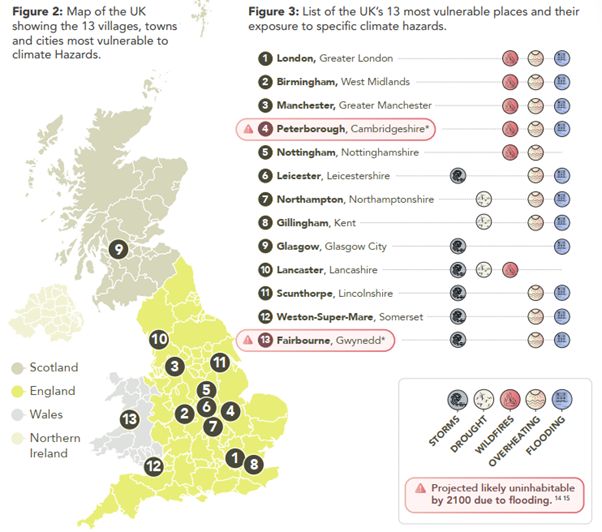
Kirsty Girvan from UKGBC talked about their Climate Resilience Roadmap published last year. It includes a map of the most ‘at risk’ locations in the UK for a range of climate risks – see below. Note the widespread overheating risk symbol.
Vince House from Aereco made a case for demand controlled MEV, which only operates when it’s needed based on temperature and RH sensors. He says it is much cheaper to install than MVHR and still has significant IAQ benefits.
Elaine Toogood from the Concrete Centre spoke about the gap in WLC between timber and concrete constructions being smaller than you might think and that concrete can potentially be more flood and wildfire resilient than timber. She quoted the findings in the FHH ‘Embodied and Whole Life Carbon of Future Homes Standard Options’ report.
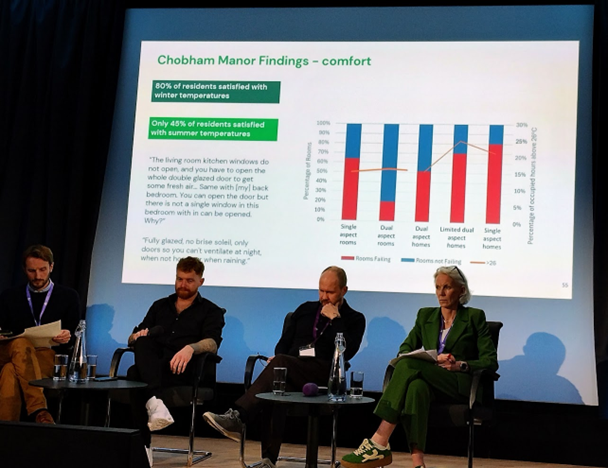
Gwenael Jerrett from the London Legacy Development Corporation talked about POE and one of her slides made it clear that Chobham Manor (on the Olympic Park near Stratford) residents were frustrated by the lack of versatile openings offered by patio doors – see slide below:
Barry Lynham from Knauf Energy Solutions made an impassioned case for why EPCs should not be used as a retrofit decision-making tool as they are so inaccurate in this context, and can lead to money being spent in the wrong places. He championed Smeter technology, which he says can estimate HTCs with 95% accuracy and provide much better information for targeting retrofit works. He indicated that policy will adopt these soon.