
I have been involved with TM59 since we started petitioning for a standardised overheating risk assessment method for homes in the early 2010s. I was part of the original development team that wrote and tested the first release that came out in 2017, and for the past six years we have been talking about and developing the second release that has been published this month.
It has been a long road with multiple rounds of updates and testing, which were repeated when CIBSE published new weather data last year. I became the lead author for the document and both Marcus and Claire have helped in various capacities. It is worth noting that TM59 (as with most CIBSE publications) was discussed, written, re-written, tested, discussed, edited, and peer reviewed on a colossal number of volunteer hours. A huge thank you is owed to everyone who contributed – you can find their names in the acknowledgements.
TM59:2026 is available to download for free from the CIBSE website here.
The recording of the launch webinar that I spoke at on 29 July is available to watch here.
The new version comes with supporting documents which outline the weather file requirements and provide a compliance checklist intended to support QA. An additional document giving advice for an enhanced testing approach written by Gwilym Still at Max Fordham is in the works and should be published soon.
New bedroom criteria
The new version benefits from valuable research led by Kevin Lomas at Loughborough University into measured thermal comfort in existing bedrooms. This work has informed the significant change to criterion (b) in bedrooms. This now sets a limit of four on the number of summer nights where the mean operative temperature in the model exceeds 27°C (or 26°C for more vulnerable occupants). This is less onerous than the hours above 26°C test in the previous version of TM59.
Ceiling fans
Kevin also led the work on incorporating a new method for modelling the benefits of ceiling fans. We have all experienced the improved comfort generated by fans in hot weather but capturing their benefit can be tricky. The cooling effect is due to the breeze they generate; this helps improve air movement within the room and through open windows, and provides adiabatic cooling by evaporating sweat from our skin. TM59:2026 only allows the benefits of ceiling fans to be included where they are installed as part of the base build, are under the occupants control and operate quietly. The new method allows the threshold temperature targets to be uplifted by up to 1.2°C under criterion a (predominantly naturally ventilated) and up to 2.1°C under criterion c (predominantly mechanically ventilated spaces). Significantly, ceiling fans are allowable as a passive measure under criterion a in step 1. The team hope that this will encourage more widespread adoption of ceiling fans. A new CIBSE guide on ceiling fans is due out soon – watch this space.
Modelling strategy
One of the more significant changes in the new version is the introduction of a three stage modelling strategy. This is intended to promote a ‘passive first’ approach so that, where mechanical cooling is installed, it is in response to site constraints (typically noise) and that energy consumed to provide this cooling is not exacerbated by poor design.
The strategy requires all tested homes to pass a passive assessment at Stage 1, which ignores any noise or security constraints on opening windows. If there are no such constraints then no further tests are needed. Stage 2 applies the site constraints and re-tests. If it is not possible to Pass Stage 2 then Stage 3 can incorporate mechanical cooling (swapping to criterion c).
The flow diagram below has been included to clarify the process of demonstrating compliance.
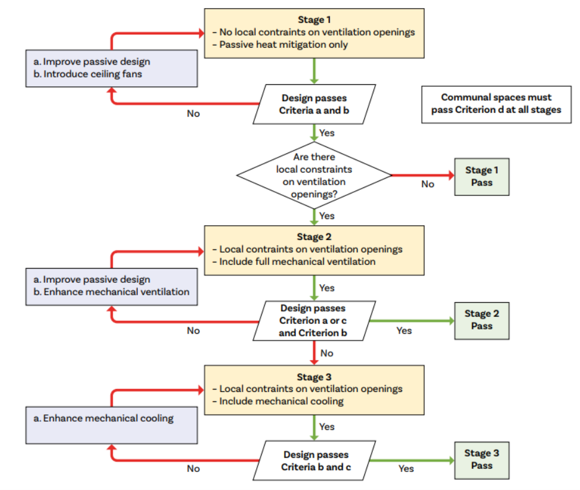
An overall pass of the TM59 overheating assessment methodology is only achieved if every habitable space within every sampled dwelling passes all the applicable criteria in Stage 1 and, if applicable, either Stage 2 or Stage 3. Communal areas in multi-dwelling buildings must pass Criterion d.
New weather data
Another significant change is that the new TM59 requires assessment against the new CIBSE future DSY weather files published last year. These new files are based on the UKCP18 projections (the previous 2016 released files used UKCP09) and provide 28 weather zones for the UK (previously 16). We blogged about these files when they came out and are continuing to test them.
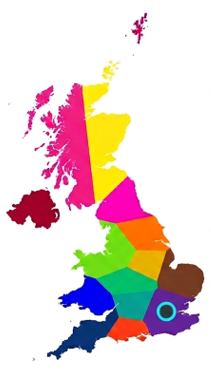
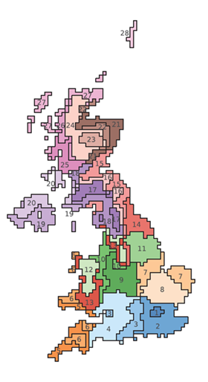
Due to changes in the time horizons and in the UKCP projections the new 2050s data is broadly less onerous for overheating risk then the previous 2050s equivalent files. This and the final round of testing helped us make the decision to require 2050s DSY1 data for compliance with TM59. We felt it was important that the test looks further into the future now that we are midway through the 2020s and the homes we build now should be lived in for many decades.
It’s important to acknowledge that the new CIBSE weather data is expensive. The 2050s and 2080s future files are available at a cost of £550 per individual zone, or £4700 for all 28 zones. CIBSE may be prepared to provide bundles of specific files at reduced cost if there is sufficient demand/pressure.
Compliance checklist
I specifically championed one of the new supporting documents, which is a list of common modelling errors and oversights within TM59 assessments. To err is human so we all need robust QA to help pick up anything we might have missed and make the assessments as trustworthy as possible. I hope this will be a useful aid for both modellers and clients seeking assurance that the analysis they’ve completed or commissioned is robust. If you have suggestions for expanding this list then do get in touch.
Approved Document O
Part O refers specifically to the 2017 release of TM59. We know that MHCLG have seen the new version and are looking at updating Part O, but as yet there is no clear timeline for if or when TM59:2026 will be adopted into Approved Document O.
That gives us some time to iron out any wrinkles and we hope that the modelling community will start using it and exploring how it works on their projects. If you find any red flags then do get in touch via CIBSE.
What TM59 isn’t
TM59 is not perfect (what is?). It doesn’t account for local micro-climates and Urban Heat Islands (UHI), and it doesn’t take account of shading from trees and other foliage, which can be significant. The dynamic thermal modelling tools we use to assess it are not perfect either, but the tool is calibrated for them. It won’t eliminate all overheating risk. Homes that comply might still be uncomfortable during a heat wave scenario or a massive party, and I believe we should be looking to develop an additional test that considers heat wave preparedness. This could factor in changes in behavior patterns, adding temporary shades, desk fans etc. Despite this TM59 has proved its usefulness and we believe this new iteration will be an improvement on the last.
TM59 is not designed for use on measured data. The criteria are based on assessing a whole summer under standard occupancy patterns and DSY1 weather data using the DTM tools. It would be useful to see overheating criteria developed that would be applicable to measured temperature data in homes.
Shame about the boring cover…
I have expressed my view that the CIBSE marketing decision to give all new publications blank covers is a disappointing one. CIBSE have such a broad range of useful documents that it is valuable to be able to tell them apart at a glance. Covers are a means to communicate the content and engage interest. I am all for consistency, but this just feels dull. Who’s with me to help change their minds??